Sunday, 16 February 2014

DAY OF EARTH SCIENCES IN AFRICA


A CLIMATE CHANGE MONITORING ACTIVITY TO BE HOSTED BY THE SOCIETY OF AFRICAN EARTH SCIENTISTS 0N 19-21ST MARCH 2014 AS PART OF DAY OF EARTH SCIENCES IN AFRICA 

The Society of African Earth Scientists (SAES) will on the 19th-21st March 2014 be participating in “Day of Earth Sciences in Africa “as part of the Association of African Women in the Geosciences-led, “Day of Earth Sciences in Africa and the Middle East”. The Society, as a partner in the event, will be hosting a climate change monitoring activity involving the annual measurement of the size distribution  of local raindrops using the standard flour pellet method.  All participants are invited to post their results on the SAES facebook page or to email them to saescientists@hotmail.co.uk. It is hoped to involve schools in Africa and the diaspora.

Activity Summary
   To measure the size distributions of local raindrops, using the flour pellet method.

Outcome
   The SAES hosted activity will

  •  Demonstrate a valuable earth science research method that requires little resources and is affordable and simple to perform.
  •  Potentially result in the collection of useful research data of use in monitoring of climate change.
  • Serve to illustrate the role of earth science in Africa
Background
   Raindrop sizes appear to increase with increasing rain intensity. But studies in tropical climates where rainfall is heavier have shown that this is only true for low intensities less than 100 mm/hr. Beyond this intensity range, we find that raindrops are smaller in size as rain intensity increases. Although no direct references are available, it has been posited within the scientific community that climate change affects the pattern of raindrop size distributions. We may, for instance, in the future see a predominance of raindrops falling into the larger size class, with fewer drops occupying the smaller size classes. Or we might see something unexpected which contradicts this. Our experiments would positively contribute to the current situation where there are too few studies to show that raindrop sizes or size distributions give an indication of climate change – although this may indeed be true.
   Raindrop sizes vary globally from (approx) 1-2 mm median size in temperate climates, to 3mm and above in the tropics.  Salako (2003) gives the following data for raindrop sizes determined using the flour pellet test, in Nigeria.

Table 1  Raindrop Sizes Determined by the Flour Pellet Test in Nigeria (Salako, 2003)
Agroecological Zone
Maximum Drop Size (mm)
Median Drop Size (mm)
Source
South Eastern Nigeria savanna
3.4
1.1-2.9
Obi and Salako (1995)
South Central Nigeria,  humid forest
5.1
2.3
Salako et al. (1995)
South Western Nigeria, humid forest
4.5
3.0
Aina (1980)

   Typically, tropical rainfall will achieve intensities as high as 150 mm per hour. The annual rainfall of temperate climates is typically 600mm per year (in UK for instance) whereas that of tropical climates reaches levels of 1000-1500mm, as in West Africa.
   Measuring the size of raindrops is most simply performed by the flour pellet method[i] , which is performed by catching raindrops in pans of flour and weighing the pellets that they form, after they have been both air dried and dried in an oven.
Detailed Description of the Activity

Objective:
   The Society of African Earth Scientists’ Earth Science Day activity invites us to measure the raindrop size distributions in our local area using the flour pellet method.

Apparatus:
1)   A quantity of plain baking  flour
2)   Particle size analysis sieves: 710 µm, 1.00 mm, 1.40 mm, 1.70 mm, 2.00 mm,  2.36 mm, 2.80 mm 
3)   Sampling pans (e.g. aluminium baking tray 32cmx22cm x3.5cm*)
*Although dimensions are specified, participants should not feel inhibited from using alternatives at their disposal. The main objective is to collect good samples of raindrops that are as approximately spherical and unspoiled as possible. In this case 3cm depth to prevent samples spoiling by splashing is crucial to maintain the quality of samples whilst sufficient tray  width will enhance the size of the sample


Procedure:
   In summary, we aim to capture samples of raindrops from a typical local storm in the period February – March, around the Annual Day of Earth Sciences in Africa. To catch the raindrop samples we fill a rectangular baking tray filled with plain baking flour to a depth of 3 cm. The raindrops are then sampled by taking two samples over a ten minute period within a typical storm. Figure 1 shows sampled raindrops in a pan filled with baking flour.
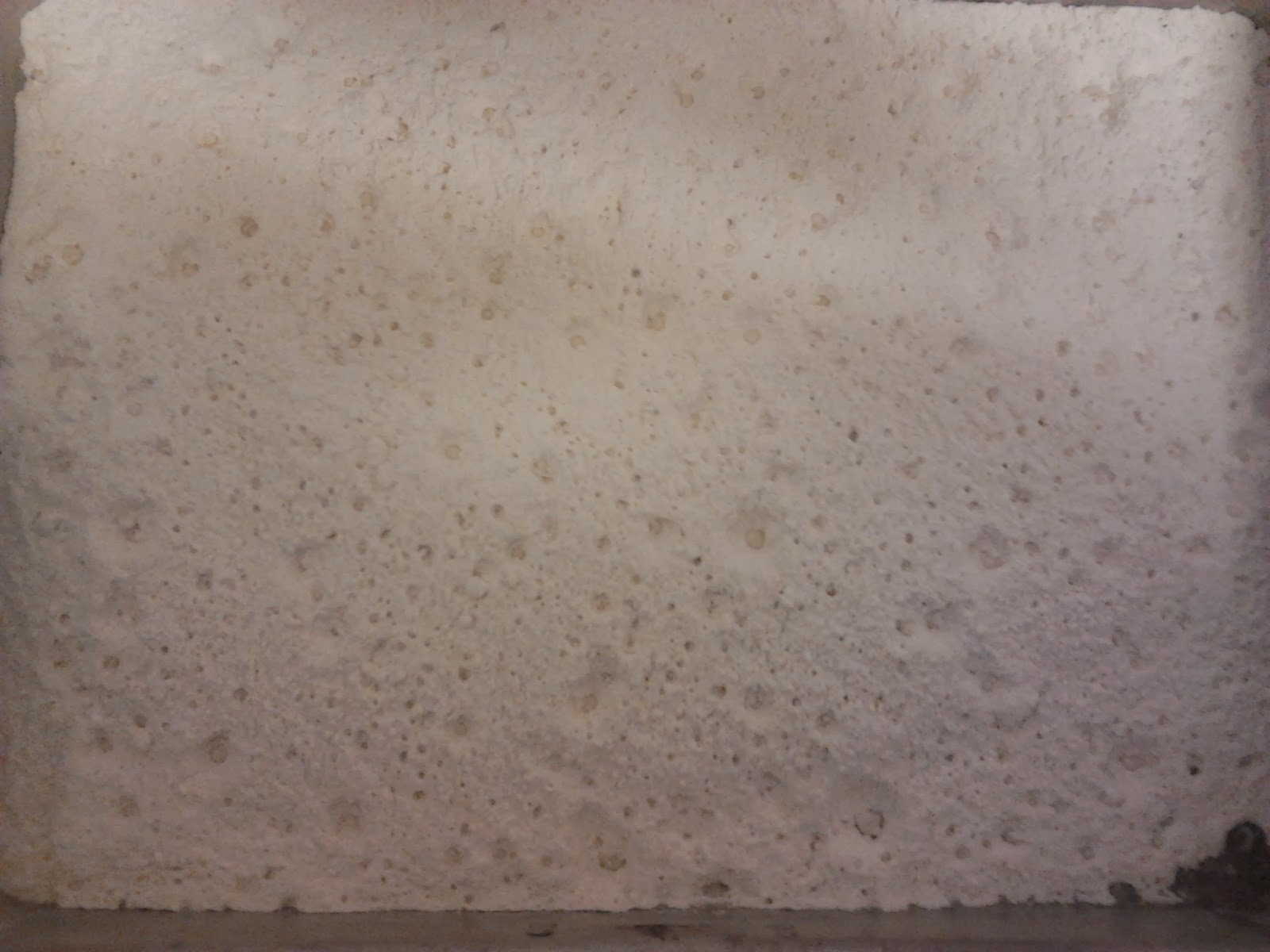

Figure 1   Raindrop flour pellet samples collected in a pan filled with 3cm depth of baking flour

   The pan or tray of collected drop samples is then left to air dry for 2 hours before being further dried for a further 2 hours in the oven at about 105 degrees centigrade.  In strict research procedure, a drying time of 12 hours in an oven at 105 degrees C may be required. But recognising limitations in time and resources for this exercise (power cuts could not guarantee 12 hours of  oven drying in some instances) we can be flexible, but still obtain good flour pellet samples. If no oven is available, then air drying for 5 to 12 hours (depending on the local climate) is probably sufficient to obtain hard dried pellet samples as shown in figure 2.
   Once the flour pellet samples are dried, they are  sorted into size classes by sieving through varied size meshes: 710 µm (or  0.71 mm),  1 mm, 1.4 mm, 1.7 mm, 2.0 mm, 2.36 mm, 2.8 mm. The pellets falling into each size class are weighed and then counted.
   Figure 2 shows the dried pellet samples of a London storm collected by the author. Photography gives us an opportunity to include those participants who are unable to obtain the necessary sieving equipment, but who can still participate by collecting raindrop samples as described above, drying them and sieving them with a standard tea strainer, and sending in photographs of the flour pellets displayed adjacent to a clearly graduated ruler graduated in millimetres (mm).  Although laborious, we can use photographs to estimate the size of the pellets and sort them into their respective size classes.
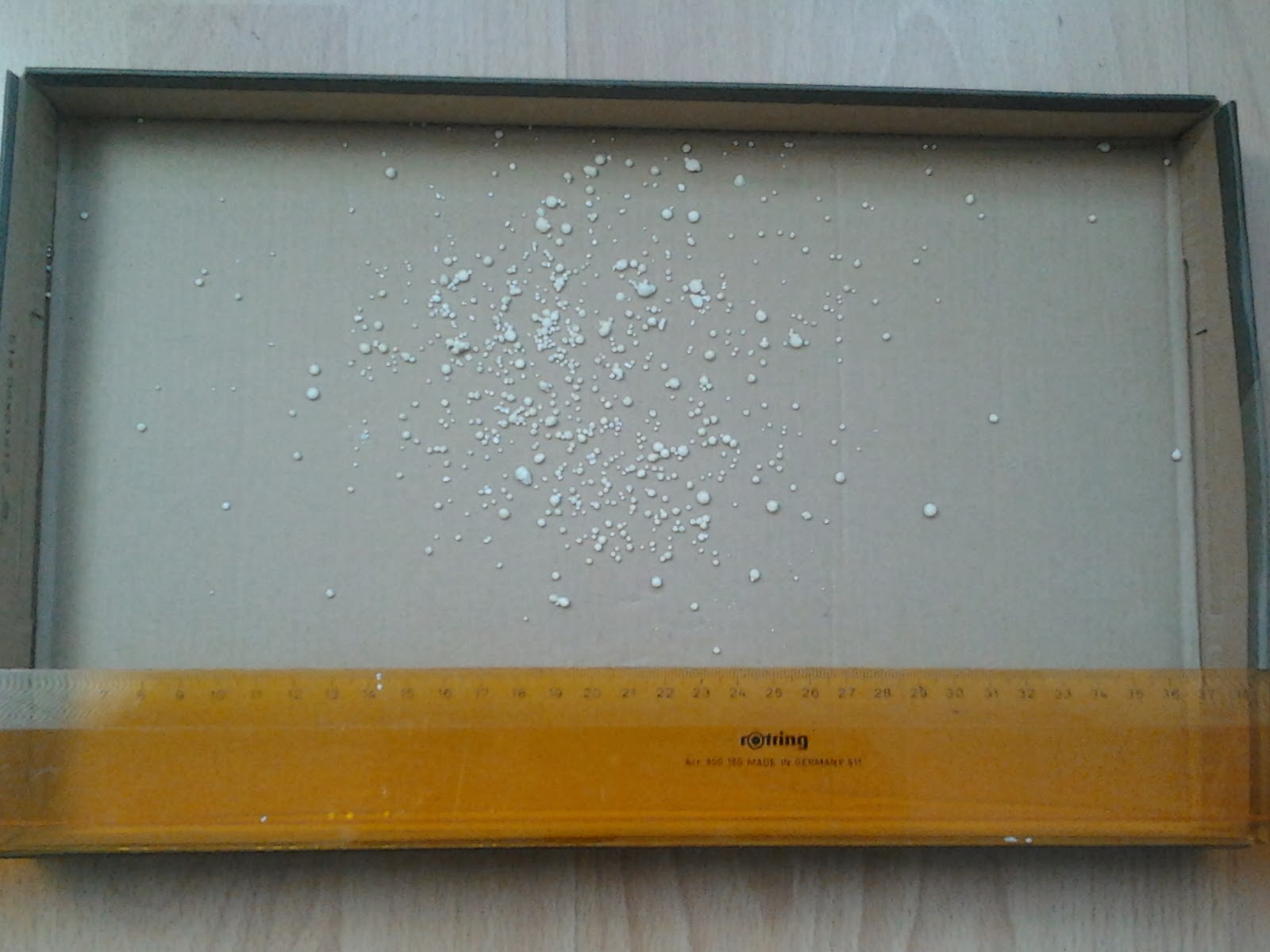


Figure 2   Flour pellets after air and oven drying, ready for size analysis

   Rigour requires that we calibrate the flour that we are using by capturing a sample of water drop of a known size. To simplify matters we require only that participants record the source of their baking flour stating the source or the brand name of the flour. The flour can be calibrated at a later stage using information on the source of the flour.
   The following is an example of the results table of flour pellet samples collected by the author in a test sampling simulated rain.

Table 2   Flour pellet test results table
A
B
C
D
E
SIZE CLASS
NO. OF DROPS
WT OF ALL PELLETS  (g)
WT OF MEAN PELLET (mg)
W
RAINDROP DIAMETER (mm)
Dr
2.8 mm
16
0.307
19.175
3.21
2.36 mm
14
0.133
9.514
2.63
2.0 mm
37
0.205
5.546
2.20
1.7 mm
71
0.256
3.611
1.90
1.4 mm
128
0.266
2.08
1.58
1.0 mm
396
0.447
1.129
1.29
710 µm
1050
0.395
0.376
0.89

   From the number of raindrops and weight of pellets in each class (columns B and C)  we are able to determine the mean weight of a pellet (column D) by dividing the weight of pellets in each class by the number of raindrops in that class. The diameter of raindrops in the class can then be determined by the following formula

Dr   =  [ (6/π) xW ]1/3                                ..........................   (1)
where W is the mean pellet weight  and Dr is the raindrop diameter.

Results:
   Please record the date of collection of flour pellet samples. This must accompany any results submitted.  Under the guidance of their tutor, it is sufficient for younger students to record in table form (as in table 2, columns A to D), results of the counting of the pellets and weighing of the pellets in each size class   to complete the exercise for DAY OF EARTH SCIENCES.  Older students (12-13 years old and upwards),   can use the data from the table with equation (1) to determine the raindrop diameters corresponding to their results and hence complete the results table  (as in table 2, columns A to E) to include raindrop diameters.  Please email your results to: saescientists@hotmail.co.uk  anytime during 19-21st March 2014.


Society of African Earth Scientists, February 2014


REFERENCES
  1. Bentley, W.A., 1904, Studies of raindrops and raindrop phenomena, Monthly Weather Review, 32: 450-456. 
  2. Salako, F.K., 2003, Susceptibility of coarse textured soils to soil erosion by water in the tropics, University of Agriculture, Abeokuta, Nigeria.


[i] first developed by Bentley (1904),

Saturday, 16 November 2013

NEWSLETTER #10 - SOCIETY OF AFRICAN EARTH SCIENTISTS


Volume 2,  Issue No. 4, August/September 2013


Foreword by the Chair of Society of African Earth Scientists, Dr Chukwunyere Kamalu
Welcome to the tenth issue of the bi-monthly newsletter of the Society of African Earth Scientists (SAES).
   In the current issue we report on the Solar Energy Photovoltaics workshop held on 22nd September 2013 including some important and key  issues arising from the discussions among the workshop participants. A full workshop guide to a 24v solar photovoltaic energy system  installation will be provided on the SAES blog page at saescientists.blogspot.com in the near future.

 Solar Energy Photovoltaics Workshop 22nd September 2013
Associated Key Issues and Outcomes Arising from  the Workshop
 Against the odds, Sunday 22nd September 2013 was a sunny day in north London, which augured well for the Society of African Earth Scientists first solar energy photovoltaic workshop.
      The workshop aimed to provide the basic practical and theoretical knowledge of solar photovoltaic energy system installation; and succeeded in imparting this to 4 persons including 3 members of SAES.
     Participants in the workshop were: Chukwunyere Kamalu (facilitator), other members and a guest of SAES, respectively, Mr Ifeanyi Okoye, Ms Iche Otonti and Mr Bo Sassegbon.
   It was a lively and inquisitive group, keen to grasp the details of the practical application of the workshop learning.
   The discussions centred mostly on the practicalities of solar installation in Nigeria, since this was the region represented by the workshop participants.

Fig. 1   Two 12v  solar panels. In series these 150W panels make a 24v array
   
   One key consideration on deciding whether to go ahead with a solar project, that arose for discussion  in the workshop was the retail price and also the environmental cost of fossil fuelled generators in Africa, compared with solar. 
   It could be demonstrated that whilst solar incurs a large initial expense, it repays the investment in the long term. But monetary cost was not the only important consideration in the comparison: Examples were shared of eastern Nigerian neighbourhoods where serious pollution and health risk resulted from the fact of many households in close proximity owning diesel generators.

Fig. 2   Charge Controller

 This is a growing problem, with serious health consequences.  Solar, therefore, not only provides a more affordable solution (as the cost of solar is falling while the cost of fossil fuels is rising), but it is also a cleaner and safer solution in health and environmental terms.


Fig. 3   Solar Charge Controller - in operation

    Another consideration in the workshop discussion arising in terms of solar electricity project planning for Nigeria, was the cost comparison of UK acquired solar components with those bought in Nigeria. Certain portable solar electric system components that are sufficiently portable to carry in a suitcase (like the charge controller and even inverters up to 2000W, for instance) are cheaper purchased in the UK; whilst solar panels may be cheaper in Nigeria.  This is especially the case, now that the Karshi solar panel manufacturing plant has been established in Abuja, the Nigerian capital city. It was envisaged that deep cycle batteries, another key component of the solar photovoltaic energy installation, could also be purchased from suitable suppliers in Nigeria.


Fig 4   Power Inverter - front view

   In the course of the day, workshop participants were given the tools to design and setup a solar electric energy system. All participants were likely to put this into practice at some point in the future.
 Workshop Content
Participants were introduced to the science behind photovoltaic energy: when light shines on a metallic surface electrons may be released leading to the flow of electric current.


Fig. 5    Batteries - 24v arrangement

   Participants  were also introduced to electricity and the concepts of electric charge – as the build up of electricity; electric current – flow of  charge from a positive to a negative terminal;  and electric potential – the potential  difference in energy between two points (the negative and positive terminals).


Fig 6    Power Inverter - rear view


    The workshop then went on to look at the benefits we may anticipate to get from the off grid system; the 4 key components of a solar electric system (the solar panels, charge controller, power inverter and batteries); and finally, a practical demonstration of the installation of a 24v, solar photovoltaic energy system. 

Earth Science Book Reviews

Land and Power: Sustainable Agriculture and African Americans by Jeffrey L Jordan,  Edward Pennick, Walter A Hill and Robert Zabawa (eds).1

This series of essays covers topics such as agrarian ethics emerging from slavery of Africans in America, contemporary black environmental thought in rural settings, the traditional African influence on black ecological thought; the symbiotic exchange between African and native American world views, black perspectives in sustainable agriculture, etc.


   John Ferrel gives a rare insight into the broad extent of the scientific achievements of George Washington Carver2, including his use of plant chemistry to make useful household items from plants.    His essay also illustrates the possible influence of Booker T Washington and the Tuskegee Institute (which employed Carver) on the black agrarian and environmental movement.
   Owusu Bandele’s paper shows the cultural, social, environmental and political importance of acquiring land in the bid to address African people’s alienation from the land3. Among young African Americans in particular, Bandele observed an apparent lack of interest in land beyond its dollar value and saw a need for this to be addressed.
   Core elements of a traditional African ecological system are laid out in the essay by Kwasi Densu4 who says: “Indigenous African communities viewed the earth as a living, concrete, yet spiritual reality. On multiple levels this core assumption was integrated into the land ethic of the community... Invariably, human beings are governed by the constraints  and order associated with the earth itself .” Densu also notes that traditional African agricultural systems are agroecological in orientation and African land tenure systems are defined by the commons and not by private ownership.
   All in all, the volume is an interesting collection of essays  helping to define African sustainable development as seen traditionally and in the diaspora.


Affiliation and Association with other organisations
SAES is affiliated to the African Association of Women in the Geosciences, Solar Sister, and is an active supporter of the African led counter land grab initiatives, Stop Africa Land Grab and Stop Land Grabbing.

Earth Science Events
  
November 24-26,  2013
7th International Conference on African Geology
Venue: Assiut, Egypt
A conference to present new advances, and research results in the fields of theoretical, experimental and applied geology of Africa.

March 19, 20, 21,   2014
Association of African Women in the Geosciences –
Day for Earth Sciences in Africa and Middle East  "Geoeducation, geoheritage and Peace building in Africa and Middle East"
Venue: International
The African Association of Women in Geosciences and the African Geoparks Network are proclaiming the 20th March as a “Day for Earth Sciences in Africa and the Middle East”
to increase the awareness about the role that earth scientists could play to help to build a peaceful, healthier and wealthier continent. This day was first celebrated in 2013. In 2014, the day will be celebarated under the title "Geoeducation, Geoheritage and Peace Building in Africa and Middle East".

August 14-16, 2014
3rd Young Earth Scientists Congress, 25th Colloquium on African Geology
“Earth Sciences for Improving Livelihood in Africa”
Venue: Mwalimu Julius Nyerere  Convention Centre, Dar Es Salaam, Tanzania
“CAG in Brief: The Colloquium of African Geology (CAG) is a major biennial meeting organized under the auspices of the Geological Society of Africa (GSAf). Since the first Colloquium in 1965, the Colloquia have been hosted by several European and African countries. The African countries that had a chance to organize this event were Swaziland, Zimbabwe, Morocco, Mozambique, Tunisia, South Africa and Ethiopia. Based on the decision of the Geological Society of Africa (GSAf) General Assembly held on 14th January 2013 at the Millennium Hall, Addis Ababa, Ethiopia (during the 24th Colloquium), the organization of the next Colloquium of African Geology (CAG25) as well as the 15th Conference of the Geological Society of Africa was assigned to Brazil. However, because of administrative problems in organizing the 25th CAG along with the Brazilian Geological Society of Brazil Conference in September 2014, the GSAf Council members decided to move the CAG25 to another country. Based on the discussion between Prof. Aberra Mogessie (President of the Geological Society of Africa) and Prof. Sospeter Muhongo, Minister of the Ministry of Energy and Minerals of the United Republic of Tanzania, in Graz Austria, in August 2013 it was decided to organize the CAG25 back to back with the 3rd YES Congress in Tanzania. This decision was approved by the GSAf Council members. The CAG25 is an independent meeting which will be organized by the Tanzania Geological Society (TGS) under the auspices of the GSAf.”


References and Selected Reading
1.    Jordan J. L., E. Pennick, W. A. Hill, R. Zabawa (eds), Land & Power:  Sustainable agriculture and African Americans - A collection of essays from the 2007 Black environmental thought conference. Sustainable Agriculture Research and Education (SARE), 2007.
2.    Ferrel, J.S., George Washington Carver: A Blazer of Trails to a Sustainable Future, in Jordan, et al (eds), op. cit., p.11.
3.    Bandele, O., The Deep Roots of Our Land-Based Heritage: Cultural Social Political and Environmental Implications, in Jordan, et al (eds), op. cit., p.79.
4.       Densu, K., Theoretical and Historical Perspectives on Agroecology and African American Farmers, in Jordan, et al (eds), op. cit.,  p.93.
5.      Gupta, S.K., Modern Hydrology and Sustainable Water Development, Wiley-Blackwell, West Sussex, 2011.
6.        A link on “Groundwater and Rural Water Supply in Africa”: http://www.iah.org/downloads/occpub/IAH_ruralwater.pdf
7.      Link to Journal of African Earth Sciences: http://www.journals.elsevier.com/journal-of-african-earth-sciences/ 

Sunday, 15 September 2013

NEWSLETTER #9 - SOCIETY OF AFRICAN EARTH SCIENTISTS


Volume 2,  Issue No. 3, June/July 2013

Content
  • Chair’s forward
  • African Quantum Leap
  • Welcome - Dr Enas Ahmed
  • Earth Science Book Reviews
  • Earth Science Events
  • References and  Selected Reading

Foreword by the Acting Chair of Society of African Earth Scientists, Dr Chukwunyere Kamalu
Welcome to the ninth issue of the bi-monthly newsletter of the Society of African Earth Scientists (SAES), in which we focus on fascinating implications of Africa’s 21st century development trend.
   We should begin by asking ourselves: How can we affect a revolution for the good in 21st century African thought about development in Africa, in terms of its health care, access to water, agriculture, energy, and communications?
  The nature of African development in the past 10 years has given us cause for articulation of an interesting and optimistic African development model. For want of a name, we call it a quantum leap model.


A great leap in clean water access could be made by exploitation of African groundwater  resources

African Quantum Leap
   An African quantum leap development model assumes that Africa will not follow the same path as Europe in development. It will skip steps. In the past decade we have seen much of Africa  leap frog other countries by largely skipping the widespread landline use phase of telecommunications, which might not have widely materialised  for the next  hundred years, and jump straight to mobile  and internet use - even in rural areas1. This has been accompanied by indigenous innovations, with Africans creating their own internet-connected devices and applications software.
 
Community school, rainwater harvesting roof
 In energy we are poised to see a repeat of the same phenomenon with Africa largely skipping the fossil fuel powered industrial phase of European development and jumping straight to solar and other renewables. This also is being accompanied by innovations, including solutions that span across the disciplines such as physics and plant biology in the case of explorations of the solar properties of plants2.
   Roads towards African quantum leaps in water, food and medicine may yet appear with innovations in technology. For example a recent discovery by Irish scientists, promises to increase food yield simply by watering crops with radio

wave treated water3.  Literally a quantum leap in the improvement of clean water access could be achieved by greater exploitation of African groundwater resources and rainwater harvesting.14, 15

  
Runoff harvested from surrounding land (and collected in excavated pan)
Despite the contrary view on African development from some quarters, GM is not considered here as part of a quantum leap; because it is at odds with a philosophy of African self reliance in food production. It risks loss of food sovereignty and the evidence cannot show that it increases food yield; whereas various traditional agricultural practices are more agro-ecological and effective in doing so. With 
GM we are left only with the negatives: the risk to health, the 

damage to the soil, the loss of food sovereignty – specifically, the loss of a

fundamental freedom: to eat our own natural food from seeds not produced or patented by a global corporation.
   In medicine, it is gradually dawning on us that Africans must re-develop their inventory of medicinal plants. This case is made most forcefully in cases where we see that the drugs from pharmaceutical corporations are not only expensive but sometimes ineffective (as in the treatment of malaria). In these cases, the argument for traditional or novel plant based medicines which are produced locally and therefore cheaper, is strengthening4. The case for such action is even more compelling when most African hospitals have a scarcity of both doctors and medicines, so there is little state healthcare provision for the ordinary people.
  
The imminent solar energy revolution in Africa  merits that we focus the remainder of our discussion  on this energy source.  Solar will be the immediate example of a quantum leap in development5, provided African communities (with or without government assistance) are able to manage the opportunity to their benefit.
   Part of the challenge for African governments of managing the opportunity presented by solar must be the careful choice of when to invest in solar panel manufacture, and when to invest in large scale solar power production plants. 
   It is probably good to have a mixed strategy that involves both the building of solar power plants and solar panel manufacturing plants.  Manufacturing panels will encourage Africans to build their own plants and mini-plants and home off-grid installations which will ensure that solar  in the country is more widely available beyond those served by the large scale power plant  - even into rural areas which are unlikely to be served by large scale schemes.
   If resources allow only one of the two options, then it has to be said that the case for manufacturing plants is compelling as the choice having optimum benefits.
   T
Solar panel manufacturing at Karshi plant, Abuja, Nigeria
here are at present five solar panel manufacturing plants in Africa, located in Ethiopia (cost: $5 million), Ghana, Nigeria, Senegal (cost: $8.8 million) and South Africa. On the whole solar panel manufacturing plants would appear to be cheaper, costing units of millions rather than tens or hundreds of millions of dollars to build. Solar panel manufacturing plants also have the added value of potentially enabling more indigenous installation projects.
  At present the largest operational solar energy plant on the continent is at Ouarzazate in Muaritania. This 15 Megawatt (MW) plant will supply the country with 10% of its requirements6.   
  
Ouarzazate solar power plant, Mauritania
In South Africa, which is trying to lessen its dependence on coal, the Jasper power plant in Northern Cape is set to generate 96 MW when it becomes operational at a cost of  $12million7.
   Ghana plans to build the continent’s largest solar energy plant, the 155 MW Nzema plant at a  cost of $400million8.  
   In Africa’s current energy make-up renewable energy (excluding hydropower)  accounts for just 1% of the total; with oil and gas 81%;  nuclear 2%;  hydro-power  16%.  Exploiting solar will probably make Africa a world leader in renewable energy. 
   Quite obviously, Africa has huge untapped potential in solar energy. It is a regrettable fact that more proportion of the African population than populations elsewhere in the world are without access to electricity.  It is estimated that 70-90% of Africa’s population has no access to electricity.
  
The Nzema plant, Ghana,  will generate 155 MW
There are obstacles to changing this situation, including a prevalent lack of political will.  In the case of solar energy, it still suffers from the myth that it is over-expensive9. There is a need to educate African governments with the facts about solar.
   A study by NORAD has shown that solar photovoltaic power used in an African rural setting is now cost competitive with diesel powered generators. One of the factors putting fossil fuel at a disadvantage is the 50% of the fuel cost which is added for transportation10.
   European organisations like NORAD can foresee the revolution in solar coming to Africa: As fossil fuel costs continue to rise, the gap between solar and the more expensive fossil fuel energy will grow, to a point where solar becomes inevitable.
   The benefits of solar in future will include: no pollution, no moving parts, comparatively very little maintenance,   falling cost with increasing usage.
  
Solar powered Senegal health centre
Probably the key obstacle to the uptake of solar among ordinary African people is the upfront cost.  Solar becomes cheaper after the initial investment.  Options include government support for community installations. But it is clear that for those Africans who pay for diesel generators; solar is a more economic long term option. Governments could assist citizens joining as groups or cooperatives in making the switch for the improvement of the economy and environment, and citizens can take the initiative whereby villages or several households can join resources to install solar on a local community level, even without government assistance. Also, for many Africans that are based in the Diaspora and remit money home, or undertake building projects in their home countries, solar is also likely to be affordable. These various economic groups can become a catalyst in popularising solar (causing its cost to fall) and stimulating intra-African trade activity in solar modules.  In this way, the cost of solar can eventually be brought down to be within reach of the ordinary majority. Certainly, the cost of solar may already be within the reach of the ordinary majority on a community or collective level, at least.
   Africa stands on the cusp of an opportunity to take a leap into solar energy and lead the way; but it is not a given. It has to still be ensured that the opportunity is managed correctly so that the benefit is enjoyed by ordinary African citizens.

Welcome - Dr Enas Ahmed
A warm welcome is extended to Dr. Enas Ahmed on her co-option to the SAES trustees’ board.  Dr. Ahmed is a geologist and paleontologist from Egypt.  She is the representative of the African Association of Women in the Geosciences for Egypt, and the Career Development Team Leader of the Young Earth Scientists Network. We look forward to her contribution and addition to our pan African board of trustees.

Affiliation and Association with other organisations
SAES is affiliated to the African Association of Women in the Geosciences, South Africa Young Earth Scientists Network, Solar Sister, and is an active supporter of the African led counter land grab initiatives, Stop Africa Land Grab and Stop Land Grabbing.


Earth Science Book Reviews

Geology for Civil Engineers by A Mclean and C Gribble 11


Conveying meeting points of engineering with earth science, this text book lays out the basics the civil engineer has to know to meet the geological challenges of civil engineering projects, often including knowledge to facilitate the secure founding of civil engineering structures on rock. For instance, it is the case that the location of a bridge or alignment of a road can change due to an unexpected rock distribution.  As well, the text introduces the engineer to the minerals and rocks, superficial deposits (soil) and distribution of rocks at or below the surface. The reader is then introduced to groundwater and the movement of groundwater below the surface. The text also looks at the implications of all of these factors, rocks, groundwater, etc., which affect civil engineering projects, as a part of a guide to project planning.


Earth Science Events
  
September 8 – 12, 2013
Geological Society of South Africa – Geoheritage 2013 Conference
Venue: Klein Karoo, Western Province, SA.
Conference invites papers focusing on various aspects of geoheritage, including Geo-education in relation to heritage and conservation, management of geoparks and important geological/geomorphological sites. There will be an exhibition of landscape art. Contributions on the role of landscape art in geoconservation are invited. Web link: http://www.gssa.org.za/

October 15-18, 2013

The Africa Climate Conference.
Venue: University of Dar es Salam, Arusha, Tanzania
Africa is highly vulnerable to current climate variability and extremes, and most likely to suffer adverse effects of change. Current limits to our collective understanding of the African climate system impede our collective ability to deliver adequate early warnings and climate predictions and restrict the use of climate information by those most vulnerable to the current and future impacts of changing climate.

October 28-29, 2013

2nd Annual International Conference on Geological & Earth Sciences (GEOS 2013)
Venue: Phuket, Thailand
With the advent of technology and industrialization, the Earth's resources are being pushed to the brink of depletion. Conference looks at the role of earth scientists in maintaining the balance between the Earth’s limited resources and the demands of industrialisation.
November 24-26, 2013
7th International Conference on African Geology
Venue: Assiut, Egypt
A conference to present new advances, and research results in the fields of theoretical, experimental and applied geology of Africa.


July 14-19, 2014
7th Conference of the African Association of Women in the Geosciences –
Earth Sciences and Climate Change: challenges to development in Africa
Venue: Nairobi, Kenya
Sub-themes to include: women and climate change, earth science and hydrology, geo-heritage, geo-tourism, earth science and local communities.


References & Seleted Reading
1.  NORPLAN Study, Cost Competitiveness of Rural Electrification Solutions, Norwegian Agency for Cooperative Development   (NORAD), 2012, http://norplan.com/files/2013/05/NORPLAN-Study-full-article-3-.pdf
2.        Vanguard, Nigerian develops solar cells from weed (mimosa pudica), May, 2013. http://www.vanguardngr.com/2013/05/nigerian-develops-solar-cells-from-weed-mimosa-pudica/
4. IRIN, Africa: turning to traditional medicines in fight against malaria, Nov. 2009.  http://www.irinnews.org/report/86866/africa-turning-to-traditional-medicines-in-fight-against-malaria  and
Malaria World, Why is WHO opposed to  an effective anti-malaria tea?, April 2013.
6.        Ibid.
7.        Ibid
8.        Ibid.
9.       NORPLAN Study, op cit.
10.     Ibid.
11.     Gribble, C. and A. McLean, Geology for Civil Engineers,  Taylor & Francis, 2005.
12.   International Fund for Agricultural Development, Soil and Water Conservation in Subsaharan Africa, Rome, 1992.
13.     Jordan, et al (eds), Land & Power:  Sustainable agriculture and African Americans - A collection of essays from the 2007 Black environmental thought conference. Sustainable Agriculture Research and Education (SARE), 2007.
14.     Gupta, S.K., Modern Hydrology and Sustainable Water Development, Wiley-Blackwell, West Sussex, 2011.
15. A link on “Groundwater and Rural Water Supply in Africa”: http://www.iah.org/downloads/occpub/IAH_ruralwater.pdf
16.    Link to Journal of African Earth Sciences: http://www.journals.elsevier.com/journal-of-african-earth-sciences/